- Buysiders
- Posts
- Unilever Does Two Deals in Two Weeks
Unilever Does Two Deals in Two Weeks
Plus: Deep Sea Mining and OpenAI Buys Who?

Short Squeez
April 25, 2026

Together with

Good morning! After a tumultuous month, we are back all time highs, even if Pam Bondi isn’t around to tell us about it. Deals are still getting done despite geopolitical uncertainty but fundraising continues to be a struggle even as SpaceX charges forward with the largest IPO in history.
With tax day behind us, our deal of the month is a tax free special just for you, Mr. IRS agent. The other two deals are also pretty unique. Things got interesting in April, I just report the news.
Unilever sells its food business to McCormick and buys Grüns in 2 weeks
Ocean Marine Expedition and American Ocean Minerals merge for $1 billion
OpenAI buys TBPN?
Don’t get stuck retracing your steps in the middle of IC. See how F2 audits the numbers behind every deal.
First time reading? Sign up here.
Have feedback? Respond here.
DEAL OF THE MONTH
Unilever Does Two Deals in Two Weeks
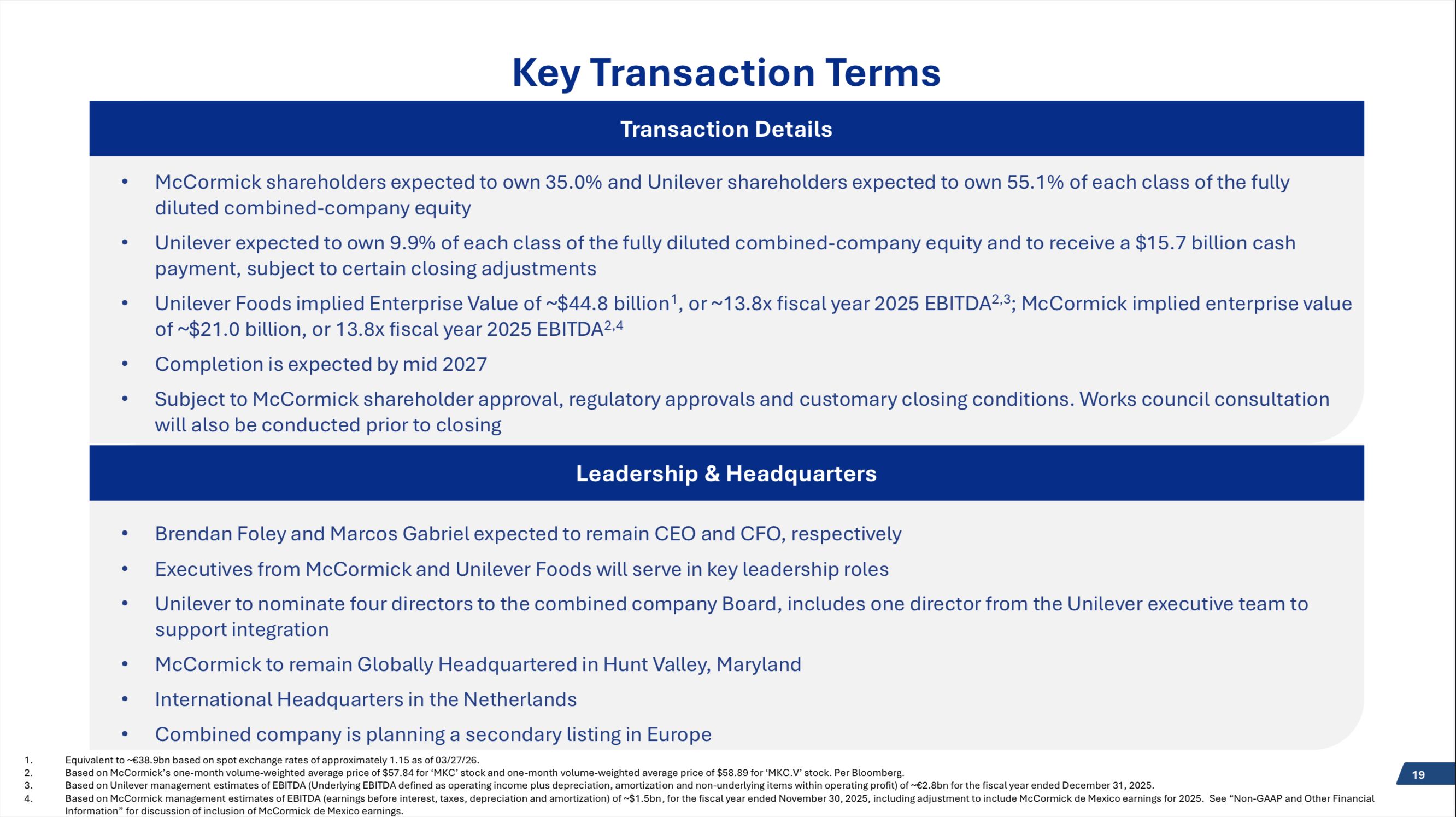
McCormick (the company responsible for your spice rack) announced it would merge with Unilever’s entire Foods business in a deal valued at $44.8 billion. The company behind Old Bay is absorbing Knorr, Hellmann’s, Marmite, and Colman’s.
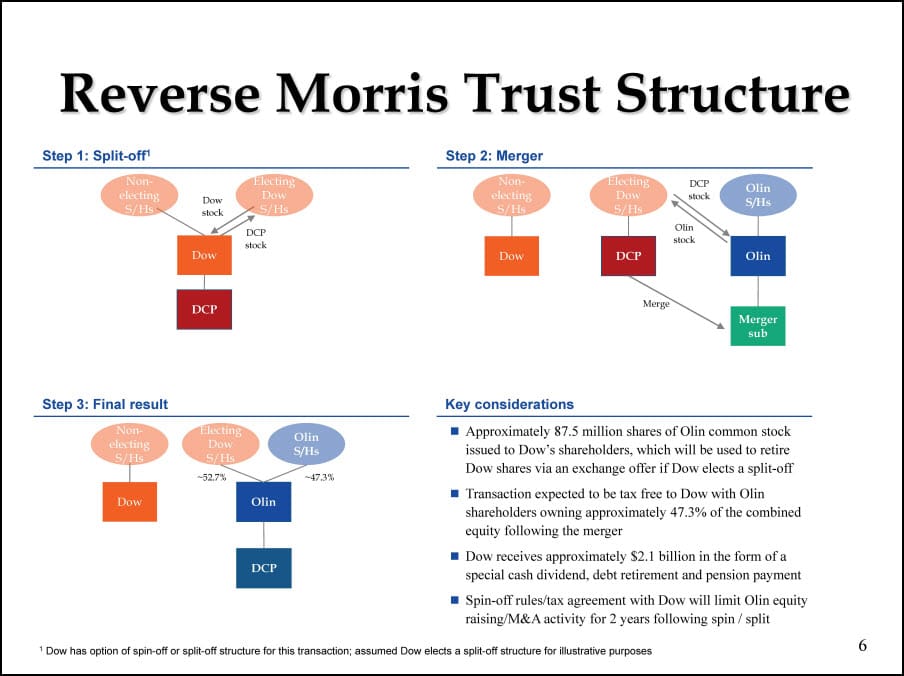
The structure is a Reverse Morris Trust, which means Unilever spins its food division into a new entity, which immediately merges with McCormick. Since it’s just past April 15th, I have to remind you that RMTs are tax-free. So for the first time ever Unilever can say their lawyers earned every penny.
McCormick pays $15.7 billion cash and ~$29 billion in stock; post-close, former Unilever Foods shareholders own roughly two-thirds of the combined company. Citi, Goldman, and Morgan Stanley are all taking a bite out of the bridge financing.
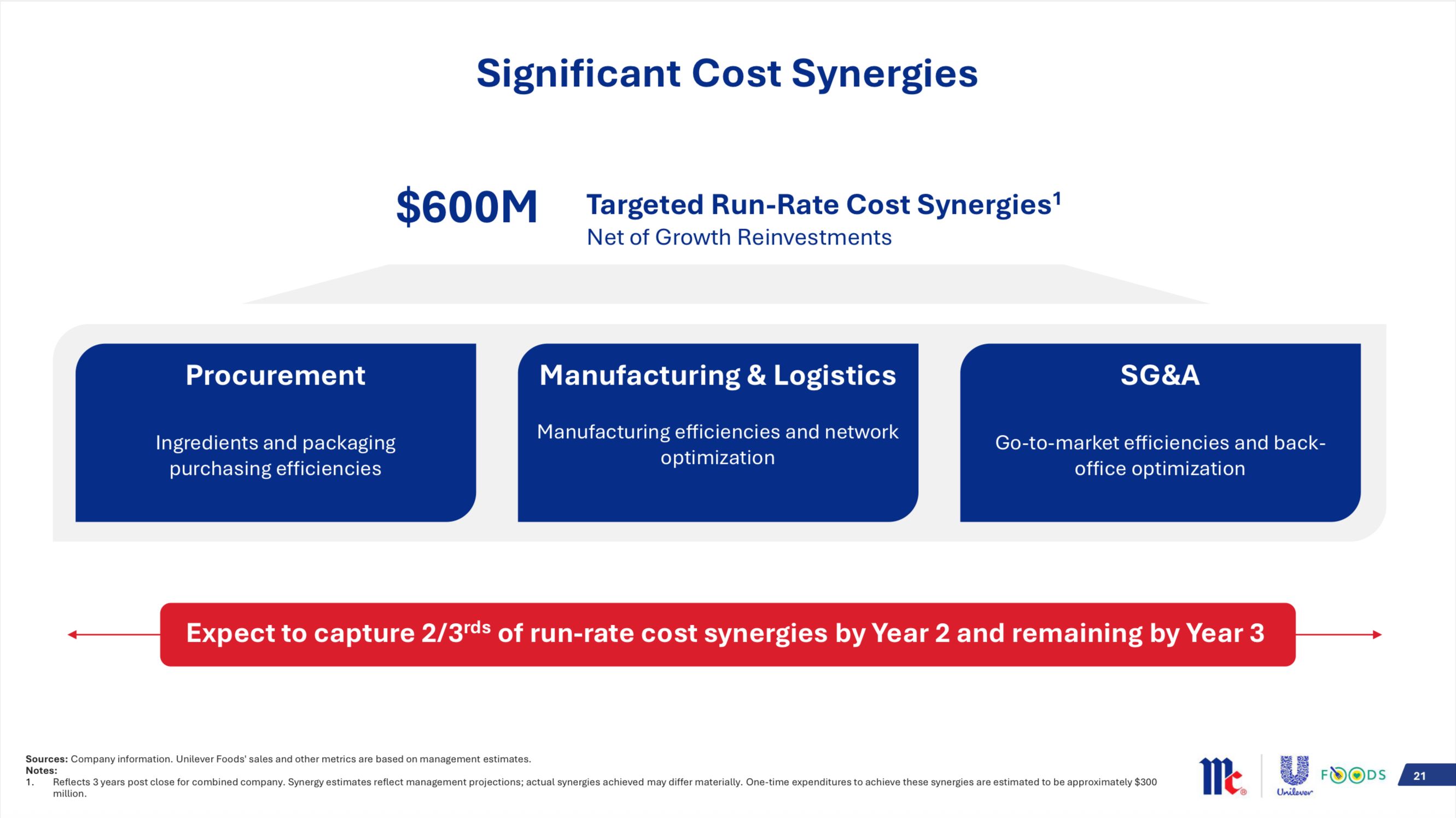
The combined business does $20 billion in revenue with ~$600 million in promised synergies by Year 3.
Margins guided to expand from 21% to 23–25%. One of the major sources of synergy is something every banker cheers for, back office optimization. This means reducing duplicative headcount and a lot of LinkedIn updates coming soon.
McCormick stock dropped 6% on announcement day, which is the market’s way of saying “we believe you, but we’re nervous.” MKC was already down 26% year-to-date. Unilever also dropped 4%. I guess no one wins on announcement day anymore.
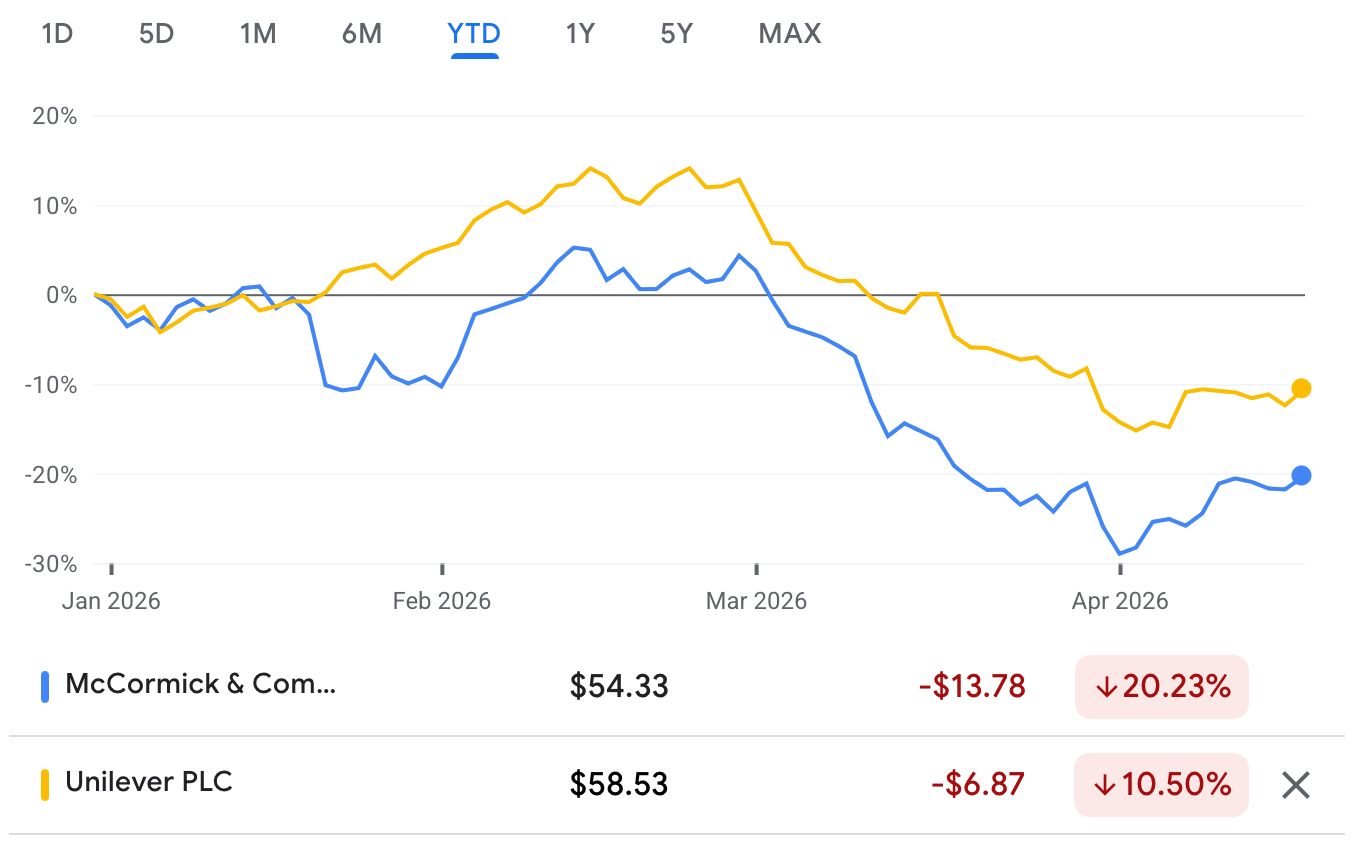
This deal marks the end of Unilever as a food company. After spinning out Magnum Ice Cream last year and now shedding the entire foods division, what remains is a pureplay beauty and personal care business… and a vitamins business as of a few days ago…
Nine days after announcing the $44.8 billion McCormick deal, Unilever agreed to acquire Grüns, a 32-month-old greens gummy startup, for a reported $1.2 billion. Man corp dev has been busy.
The reflexive take: “Unilever just sold food and immediately bought food,” is technically wrong, even if you do eat the gummies.
Grüns lives in Beauty & Wellbeing’s Wellness Collective alongside Liquid I.V., Nutrafol, OLLY and Onnit. Supplements aren’t classified as food at Unilever, which is the kind of distinction that only matters when a journalist calls your IR department at 8am.
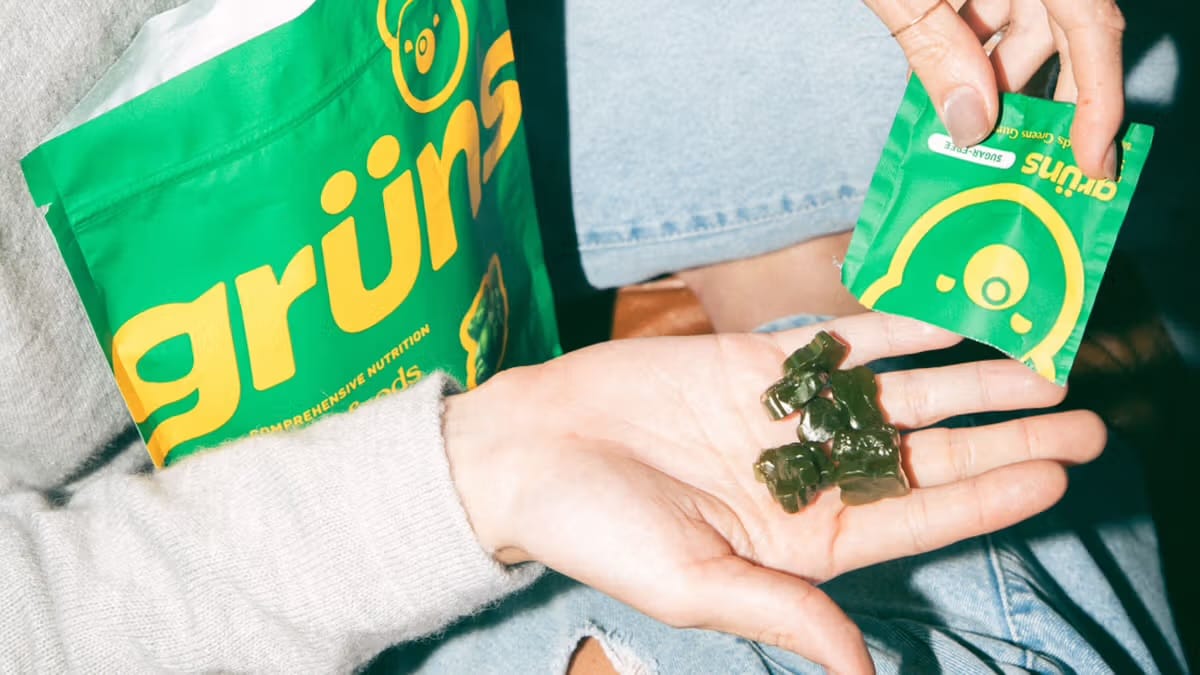
The McCormick perimeter was drawn around culinary flavor. Grüns is a daily nutrition gummy with 60 ingredients including organic spirulina, prebiotic fiber, and whatever adaptogens are in vogue this week.
What makes this interesting is the multiple arbitrage. Unilever sold slow-growth, private-label-exposed culinary brands at ~14x EBITDA. It bought a startup growing 600% year-on-year at ~4x sales. A start-up that doesn’t even use AI mind you. No wonder their share price is getting killed.
Both trades were shaped by the same force: GLP-1 drugs are terrible for packaged food and excellent for supplements. Unilever sold the victim and bought the beneficiary in the same fortnight.
Grüns was founded by Chad Janis, Stanford GSB, former Summit Partners growth investor, who launched in August 2023 after 25% of his MBA cohort tested prototypes. The company hit profitability at 14 months, crossed $300 million ARR by October 2025, and is now in 6,300+ retail doors including Walmart, Target, Costco and Ulta.

Janis reportedly retained ~50% of the company, implying personal pre-tax proceeds north of $500 million on a business he started two and a half years ago. The Series B investors at a $500 million valuation in May 2025 are sitting on ~2.4x in under a year. That’ll play well in the fundraising materials.
So a divestment and an investment in 2 weeks? Presumably someone in Unilver Corp Dev is taking the rest of the year off.
PRESENTED BY F2
Built for Speed (and Precision)

In investment memos and IC decks, the inevitable question is simple: Where did this number come from?
Tracking the origin of a figure inside a complex model or spreadsheet can take longer than the analysis itself, especially when sitting in front of everyone at IC.
F2’s Audit Mode is designed to make that process fast and error-free. Inside Excel, it can trace any value back to its exact origin, including the file, sheet, cell, formula, and source material behind it.
Instead of manually retracing calculations or rebuilding work, your team can audit numbers in seconds and move forward quickly.
According to F2’s clients, the workflow can reduce diligence and review time by up to 75%, while keeping every output fully auditable.
STRATEGIC DEAL OF THE MONTH
Mining Goes to the Deep Sea
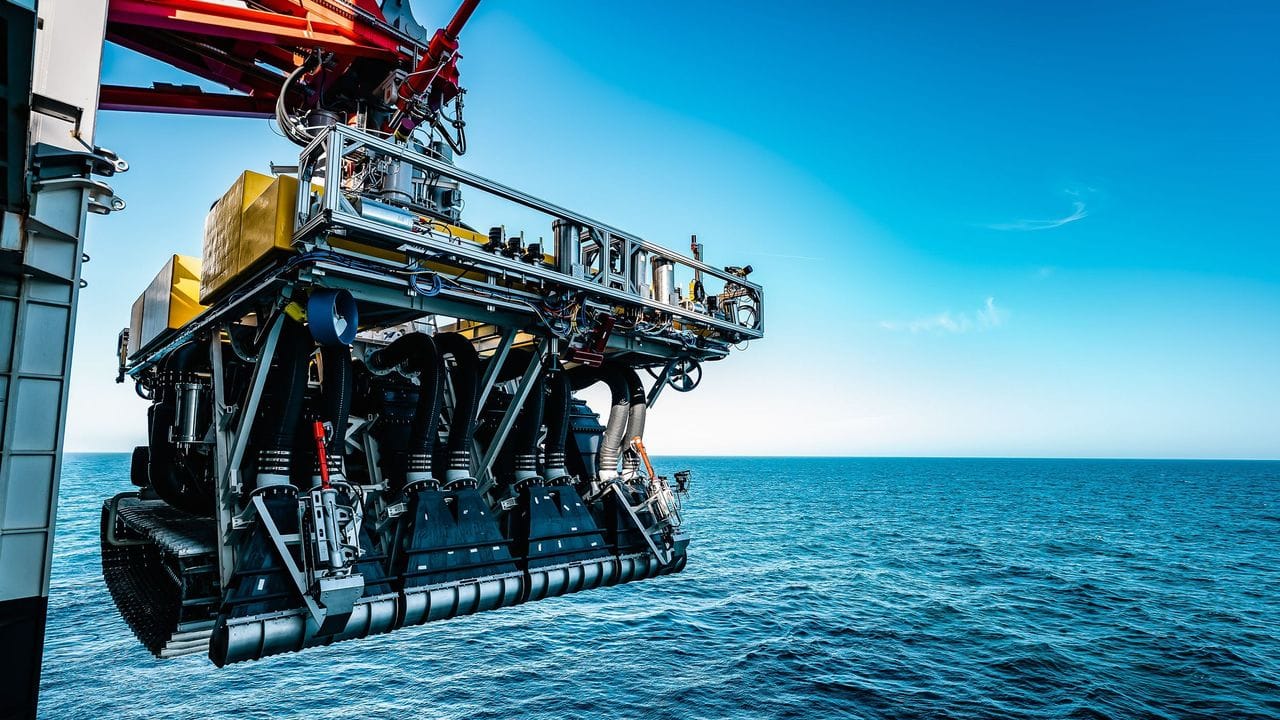
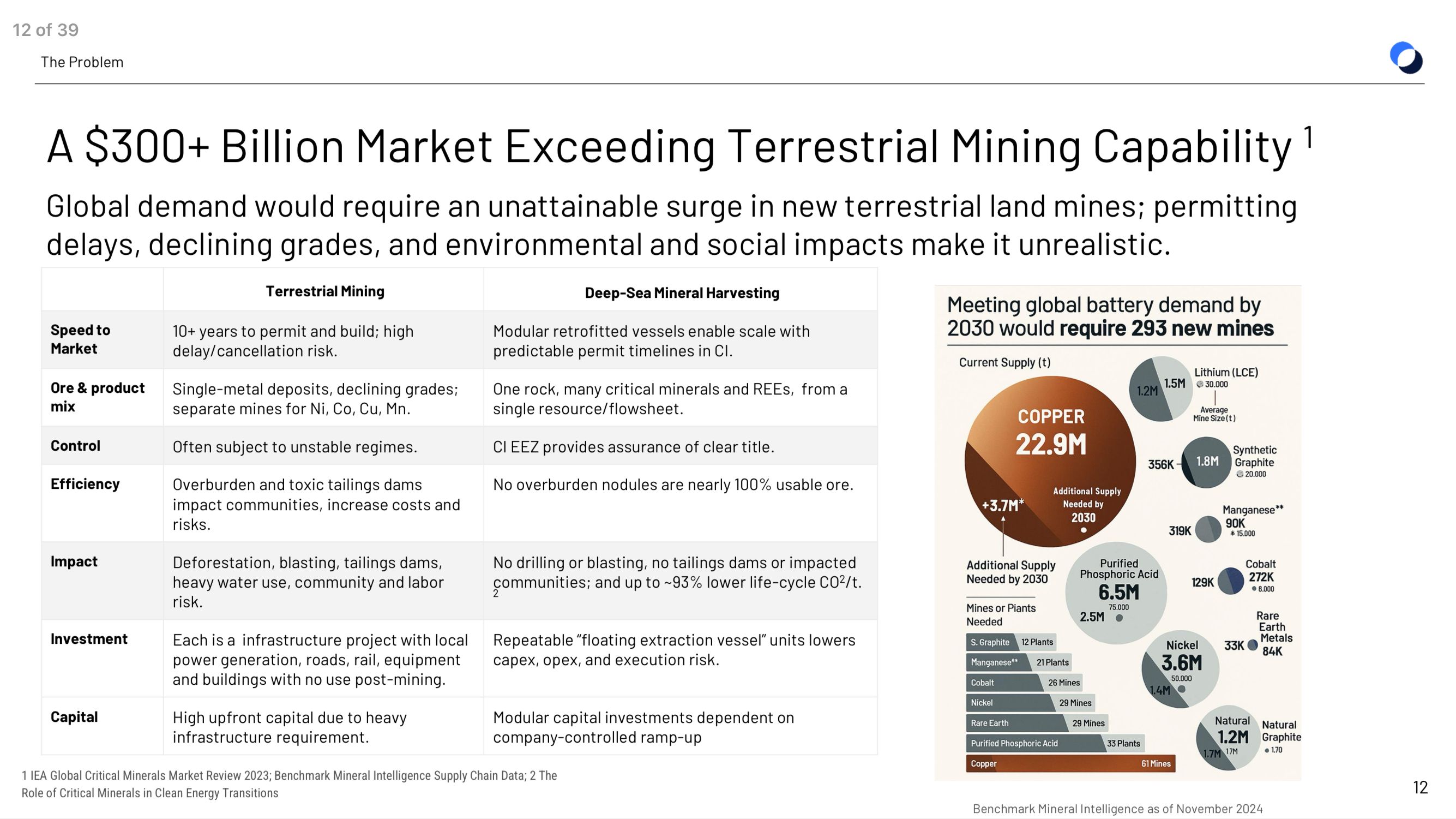
You’ve heard me talk about mining before but this time we have a new twist. Mining on land is so 2025. Now, we are going to the ocean floor for our rocks because that’s…environmentally friendly I guess? Just as long as no billionaires are planning on riding the first sub we may be in business.
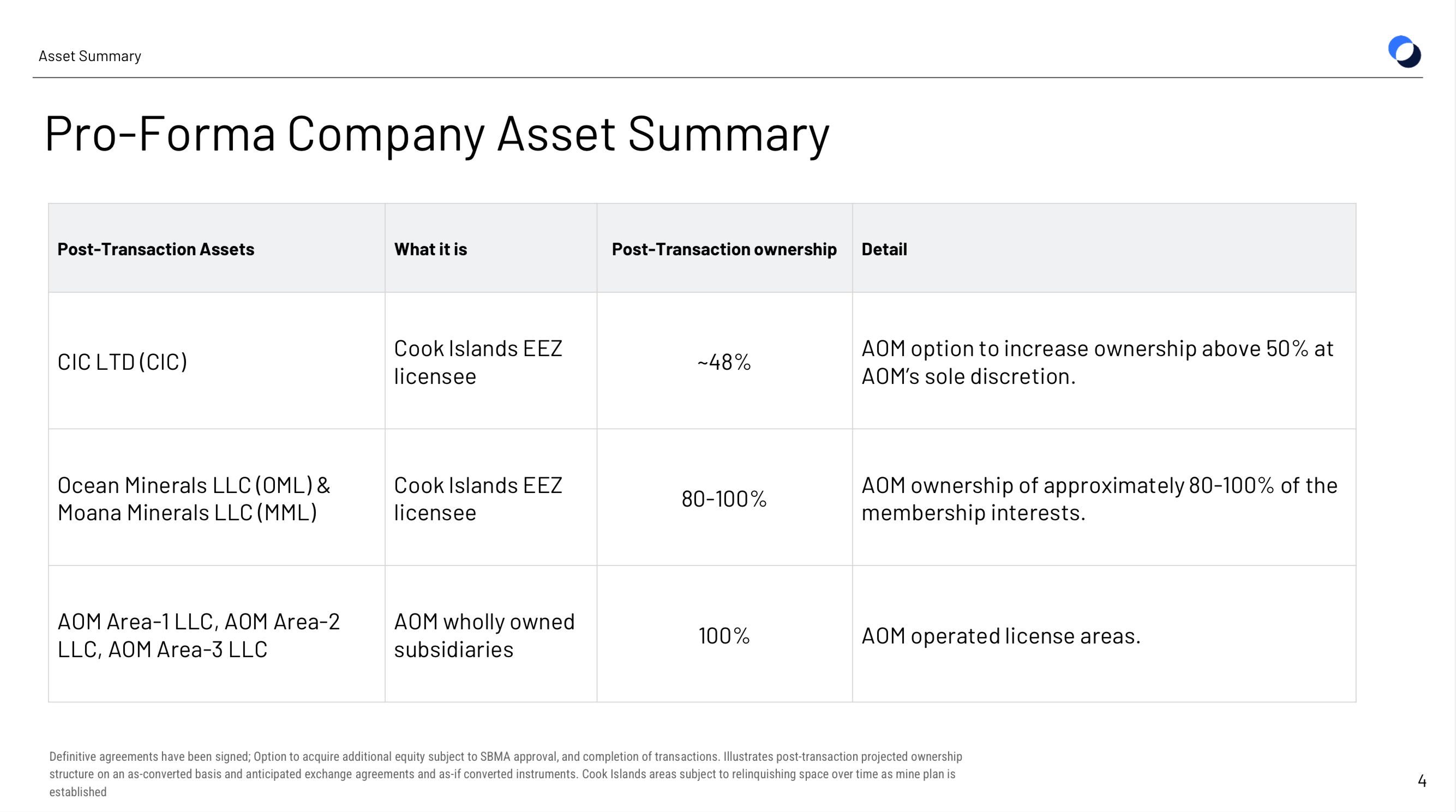
American Ocean Minerals announced it would merge with Odyssey Marine Exploration (NASDAQ: OMEX) in an all-stock deal valuing the combined entity at ~$1 billion. The mandate: vacuum polymetallic nodules — clumps of nickel, cobalt, copper and manganese — off the bottom of the Pacific Ocean.
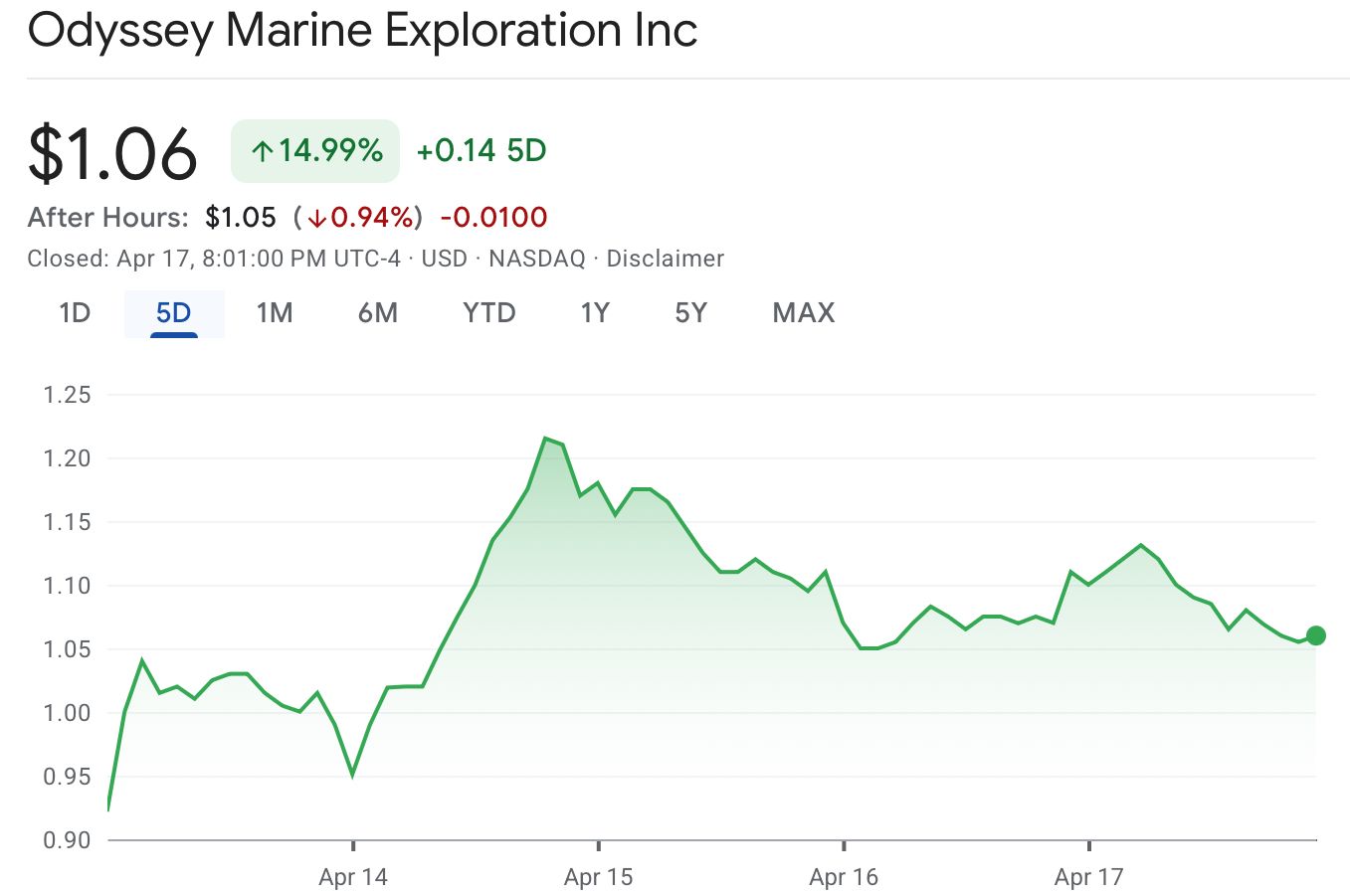
OMEX entered the day at $0.83 with a going-concern qualification and TTM revenue of $354,000. The announcement triggered a 110–150% intraday pop to $2.13 on 330% of average volume. It then gave most of it back. Analysts have not published price targets. The $1 billion figure is negotiated, not market-tested. Shocking.
The structure is a reverse takeover: AOM holders control the combined company, Odyssey provides the Nasdaq listing, and the legacy Mexican phosphate business spins into a liquidating trust for OMEX shareholders. Financing includes a $75.6 million convertible bridge, a $156 million PIPE, and up to $35 million in additional notes.
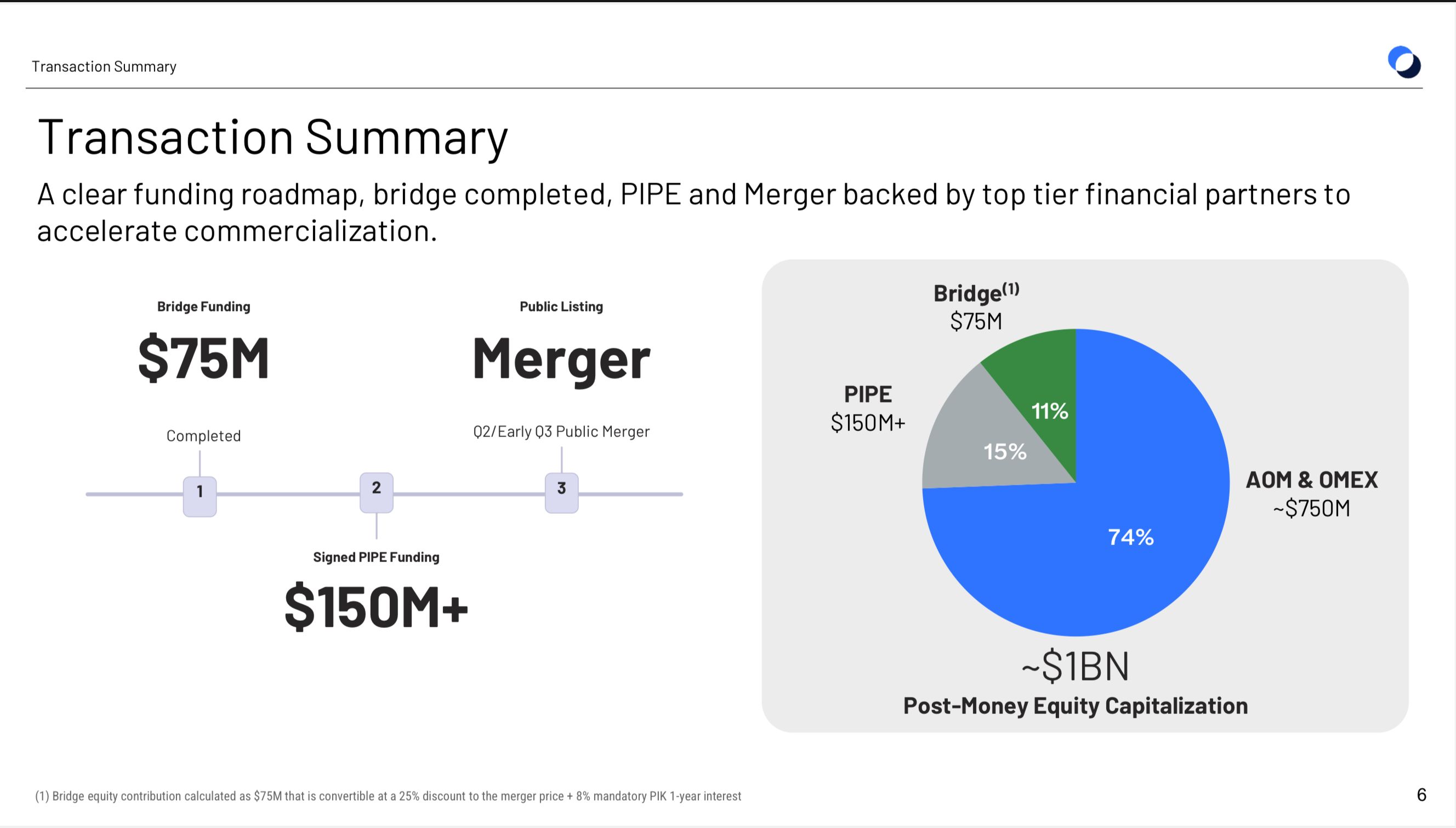
Citi and Cantor Fitzgerald placed the PIPE, Cantor being chaired by Brandon Lutnick, son of Commerce Secretary Howard Lutnick, who oversees NOAA’s deep-sea permitting buildout. That detail appeared in zero press releases.
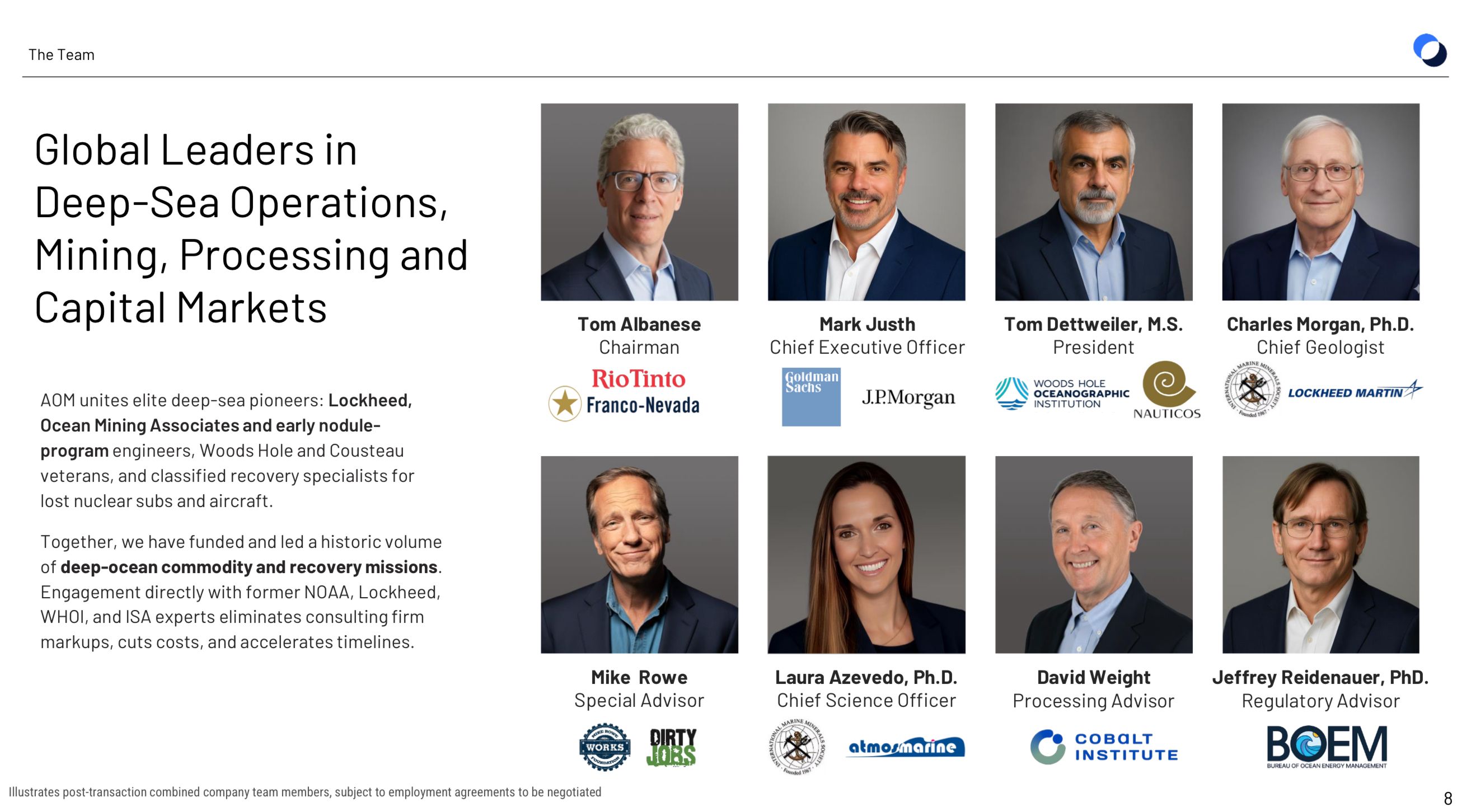
The management team is the actual signal. Chairman is Tom Albanese, ex-CEO of Rio Tinto and Vedanta, the most credible mining executive attached to any deep-sea venture. CEO Mark Justh is a former JPMorgan and Goldman banker who was already Odyssey’s lead independent director, which explains why OMEX became the vehicle. Mike Rowe of Dirty Jobs is a founding investor and brand ambassador, so maybe this company will get its hands dirty.
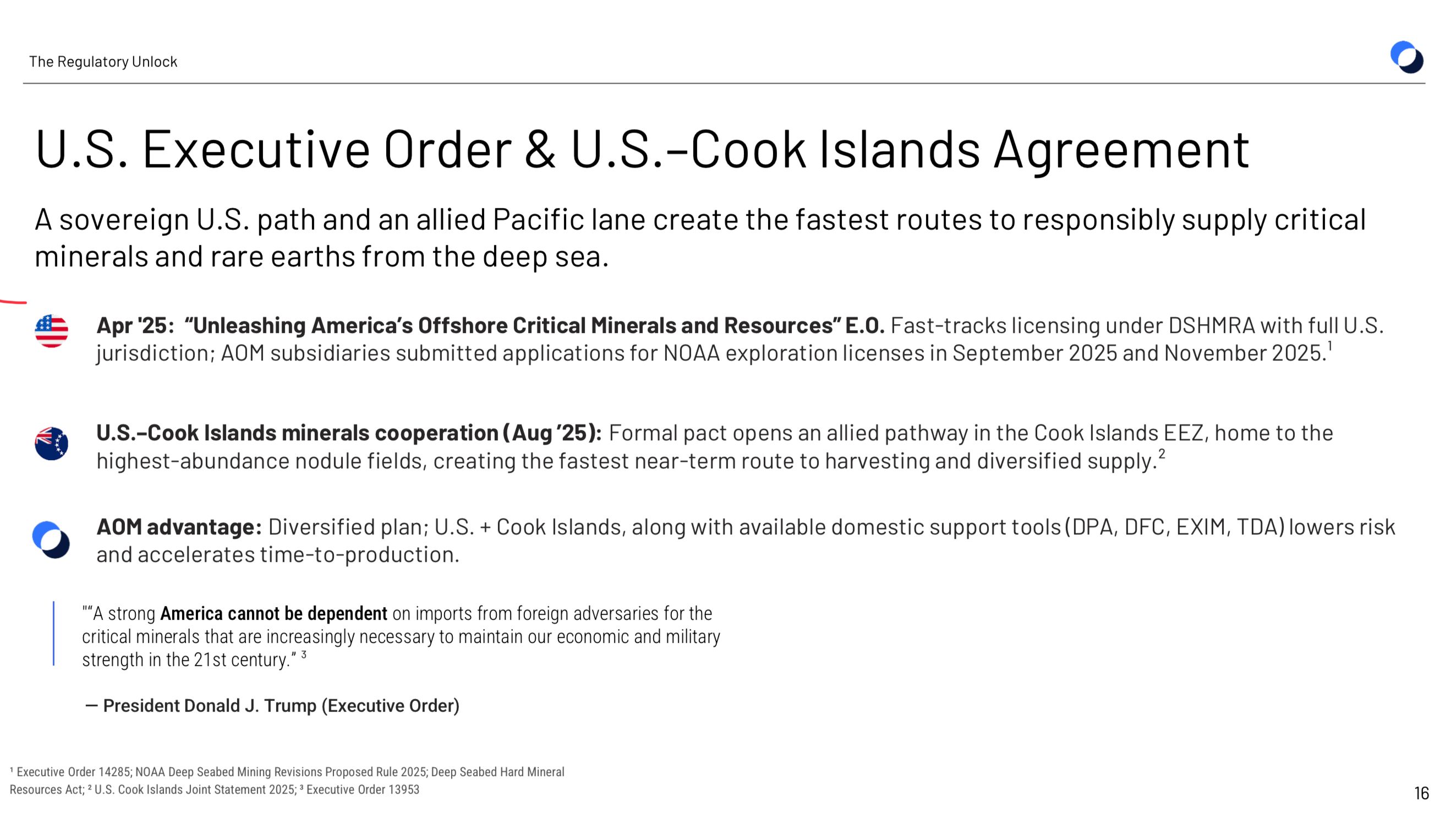
The thesis is regulatory arbitrage. The International Seabed Authority has failed to finalize a Mining Code for three years running. Meanwhile, Trump’s April 2025 executive order, NOAA’s January 2026 permitting rule, and a U.S.–Cook Islands critical minerals agreement have created a parallel licensing pathway that bypasses the ISA entirely.
AOM holds licenses across the Cook Islands EEZ and U.S.-regulated CCZ waters, covering 500,000+ km² and more than 1.4 billion tonnes of inferred nodule resource. The bet is that the domestic U.S. permitting track closes before the multilateral one opens.
The environmental opposition is loud (900+ scientists, Greenpeace, €24 trillion in institutional restrictive policies) and does not currently constrain NOAA or the Cook Islands authority. China signed a competing seabed MOU with the Cook Islands in February 2025. Congress noticed.
The trade has three legs: arb on PIPE pricing vs. pro-forma EV once the S-4 is effective; optionality on NOAA permit timelines and Cook Islands PFS milestones; and a residual claim on a $37.1 million NAFTA award sitting in the PHOSAGMEX liquidating trust. All three require a tolerance for timelines measured in administrations rather than quarters.
MOST QUESTIONABLE DEAL OF THE MONTH
Altman is as Altman Does
Normally, I would do exit of the month but that’s reserved for Chad and the boy’s at Grüns, obviously. While this is an exit, it’s also a deal so ridiculous, I thought it was an April fools joke when I first read it.
OpenAI announced the acquisition of TBPN - its first-ever media purchase. Price undisclosed. The FT and WSJ both reported “low hundreds of millions.” Puck put it at ~$150 million. Chris Lehane went on CNN and declined to confirm.
TBPN is a three-hour daily livestream that has become Silicon Valley’s water cooler. Cohosts John Coogan and Jordi Hays — both longtime Altman associates — run a format best described as SportsCenter for tech.
They ring a gong when a startup raises money. Guests have included Altman, Zuckerberg, Nadella, Benioff, and Ken Burns. Daily viewership: ~70,000. Target audience: the ~200,000 operators who move IPO books and enterprise buying decisions.
The business did ~$5 million in revenue in 2025 and is pacing above $30 million in 2026. As a condition of the deal, the advertising business is being wound down entirely.
OpenAI is paying ~$150 million for a media property it intends to stop monetizing. This is not a financial investment, which is obviously why OpenAI did it. I mean losing money is practically their whole business model.
What it is: pre-IPO narrative infrastructure. OpenAI’s Chief Communications Officer left in January 2026. The company is targeting a late-2026/early-2027 IPO at a reported ~$1 trillion valuation while secondary shares trade at a 10% discount to the last round.
The press reaction was unanimous. Ben Thompson: “OpenAI’s purchase of TBPN makes no sense, which may be par for the course for OpenAI.” Om Malik titled his column “OpenAI: Masters of Agitprop 2.0.” One unnamed OpenAI investor told the FT: “Frankly, I don’t understand it — it’s a distraction and it annoys me.”
Altman’s response on X: “I don’t expect them to go any easier on us, am sure I’ll do my part to help enable that with occasional stupid decisions.” You mean…like this one, Sam?
PS: Hey Sam - the Overheard on Wall Street audience is pretty big, averaging 500K views a post if you’re in the market...
NEWS ROUNDUP
Top Reads
What'd you think of today's newsletter? |